

cross-posted from: https://piefed.zip/c/energy@slrpnk.net/p/1799048/solid-state-battery-hits-381-wh-kg-as-taiwan-mass-production-begins
For comparison, li-ion 18650-size 3500mAh cells are 260Wh/kg, that is almost +50% capacity per gram but only +15% capacity per volume
Drone batteries then
Only if power density is good enough
I’d have thought that the weight would be the deciding factor
Still…

I understand that these things are perhaps less flammable because no electrolyte that burns, but also there’s a question about efficiency, manufacturability, overheating, charge depletion in time and across cycles etc. Maybe it’s not even any good
Sure. And, given how people tend to hype stuff which never works out, it probably isn’t. But, sometimes it is, so… maybe?
it’s nice to find someone who gets it in the wild. i’ll give you an example: 90% of clinical trials fail, and it creates a predicament: some news site grabs a headline from university press release, which is informed by a paper. paper says that maybe there is some effect in cell line, if you use some new compound, against some kind of cancer. sometimes it grabs more attention if it’s a compound from common plant because of folk medicine connection. press release: university w made a compound y that kills cancer z. article: university w makes a drug for cancer z. clickbait youtube video: underdog researcher DESTROYS ALL CANCER. naturally, years pass, compound goes through extra testing and in most of cases, fails, many times even before it ever touches humans. sometimes it doesn’t work, sometimes you need quarter of body mass of it to see effect, sometimes it wipes out liver, sometimes it does something else entirely. then clueless people looks back at these headlines, and ask, where is cure for cancer z, or sometimes even where is cure for all cancer. the stupid and embarrassing reality is that it never existed, because it was at best toy compound and maybe someone develops something out of it, but mostly it won’t. some people take it as a sign of conspiracy that suppresses inconvenient TRUTH and there is a cure, but you can get it only from a BOLD RESEARCHER THAT THREADS WHERE NO ONE ELSE DARES. then we get clinics ran by scammers and a lot of dead people
that said, there’s already a lot of things, mostly moving things, that can be electrified with current technology. it would be a nice thing to have something better, but it’s not like it’s strictly necessary to have it
Correct me if I’m wrong, but wouldn’t this be great for electric commercial flights?
Every percent gain in battery weight compounds insanely for commercial flight.
It is the same problem as with rocket fuel. You have to store the energy to carry the capacity to store the energy. And that’s even worse for batteries because at least the rocket gets lighter as it uses its fuel. Whereas a loaded battery is basically the same weight as a loaded one.
I realise that. I’m reading that energy densities will have to be around 800wh/kg for planes to rely entirely on battery power, but there are shorter distance planes already using battery power. With how quickly solid state batteries recharge, I don’t see why planes couldn’t just stop more often. It’s a small price to pay for zero emission flights.
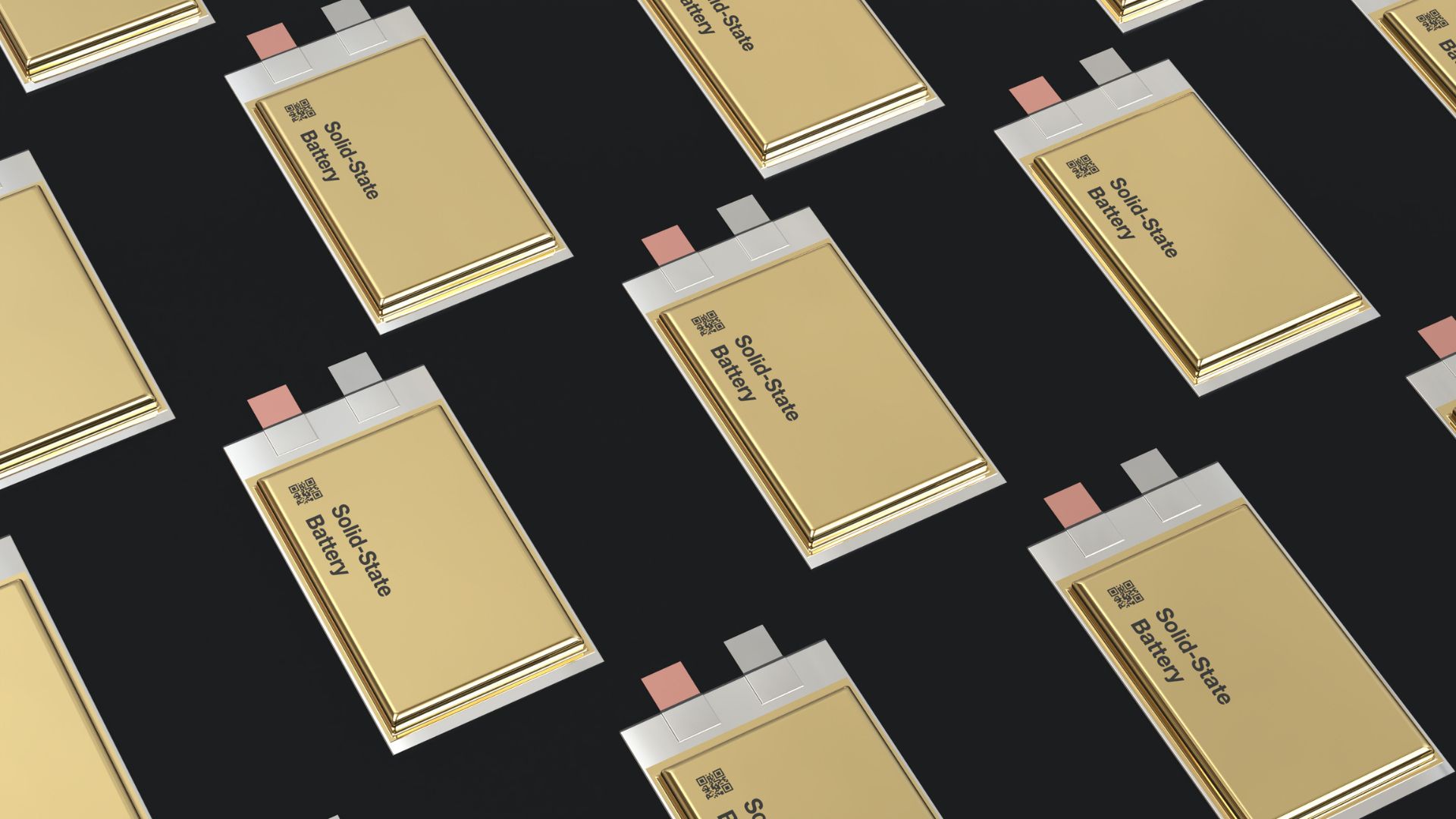
ProLogium Technology has started mass production of its Gen 3.5 Lithium Ceramic Battery in Taiwan, putting an all-solid-state battery design with high energy density into Giga-level manufacturing.
A third-party test by TÜV found that ProLogium’s 185.4 Ah large-format cell reached 381 Wh/kg of gravimetric energy density and 903 Wh/L of volumetric energy density. In simple terms, the cell can store more energy for its weight and size, an advantage for electric vehicles and other applications where battery space is limited.
The cell also passed a separate test by UL Solutions under China’s GB/T 43568-2026 methodology for all-solid-state batteries. After six hours under vacuum at 120 degrees Celsius, the cell recorded less than 0.05% weight loss, compared with the standard’s maximum threshold of 0.5%.
That result allows the cell to be classified as all-solid-state under the Chinese standard. GB/T 43568-2026 has also been submitted to the International Electrotechnical Commission as a reference for international standardization.
Battery numbers meet factory scale The bigger development is not just the cell’s performance figures but the manufacturing scale behind them. ProLogium says its Gen 3.5 battery is now in mass production at its Giga-level facility in Taiwan, moving the technology beyond laboratory and pilot-line production.
The company’s Lithium Ceramic Battery platform has been developed since 2012. ProLogium began commercial production in 2013 and says it has since shipped more than 2.4 million cells for consumer, specialty and automotive applications.
Its manufacturing process has also evolved in stages. A Sheet-by-Sheet production line began commercial operation in 2013, followed by a Roll-to-Roll line in 2017. The company’s third-generation Giga-level manufacturing platform entered operation in 2024.
That progression is important because solid-state batteries have faced a difficult transition from promising laboratory cells to reliable, high-volume manufacturing. ProLogium’s approach is to carry manufacturing knowledge, equipment, and process improvements from one battery generation to the next instead of starting over at each stage.
Same architecture, new chemistry At the center of the platform is ProLogium’s Logithium cell architecture. It uses a ceramic separator and an edge-frame structure that extends around the electrode perimeter to help isolate potential burrs while providing sealing and insulation.
The architecture has remained in place as ProLogium has changed electrolyte chemistry and active materials. The company says this allows new battery generations to use much of the existing manufacturing foundation.
That strategy will be tested further with Gen 4, which uses a fully inorganic superfluidized electrolyte while retaining the same Logithium architecture and manufacturing process. ProLogium expects only about 10% of its existing Giga-level production line and related equipment to require modification for Gen 4 production.
Gen 4 is also designed to add an Active Safety Mechanism intended to prevent thermal runaway by stabilizing electrode active materials at high temperatures. The company is targeting applications including electric vehicles, maritime systems, aerospace, unmanned systems and data centers.
ProLogium is also building a manufacturing strategy beyond Taiwan, with France planned for scaled production and North America targeted for phased localization. The company says the model could use battery inlays produced at scale in France or Taiwan before downstream partners assemble them into cells, modules and packs closer to customers.
For now, the Gen 3.5 production milestone puts ProLogium’s solid-state battery technology on a manufacturing line rather than leaving it at the prototype stage.
That website is cancerous even with an ad blocker.
Any info on the cost? What the price per kWh would be?
Wait that’s the whole article? One sentence.
Quoted the article for ya in another comment.
Is that from the same website? All I see for any article on their website is a single sentence.


