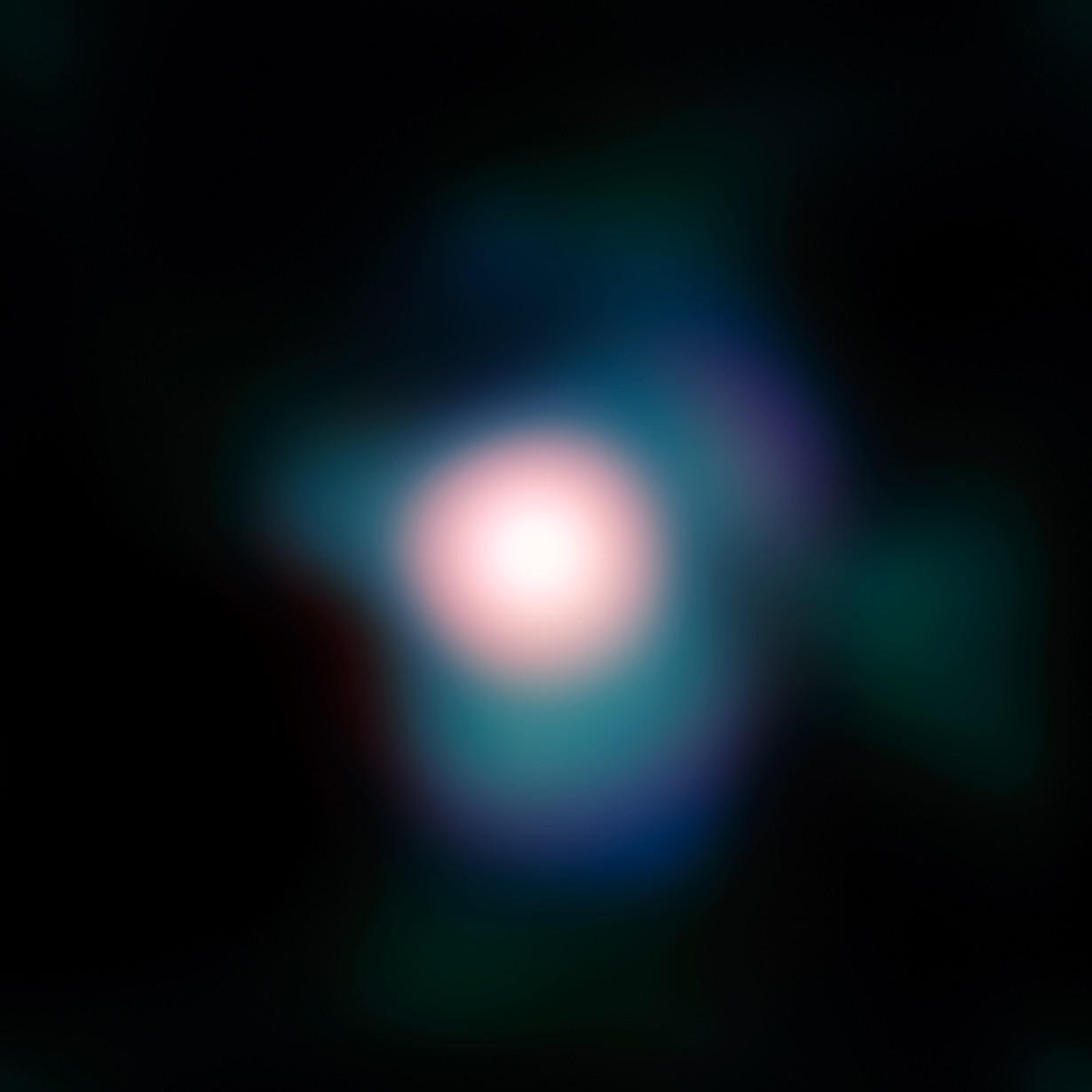
~700x the size of our Sun. It would engulf out past mars and the asteroid belt
Except that it’s wrong. Space is cool, and Betelgeuse is impressive, but that isn’t how it looks.
The star is out of focus, and the movement is due to the earths atmosphere. I could get that visual with my phone and a handheld binocular.
Any image of a star (except for our own sun), which is more than just a point of light, is a faulty representation. It’s misleading. Share cool stuff, but let’s not say things that we don’t know to be true.
But I’m looking at it! It’s right there! All wobbly and shit! How can it not look how it looks? And how does it look if not like that?
And how does it look if not like that?
Very much like our sun, only much larger and muuuuch redder.
Any image of a star (except for our own sun), which is more than just a point of light, is a faulty representation. It’s misleading. Share cool stuff, but let’s not say things
You got me! I did not know we had that. Thanks. Which one is that?
(I guess we also have the images of the light surrounding black hole in the center of our galaxy, which is also quite far away, and has quite som pixels. Although it is also larger than a typical star.)
No problem!
I take the pictures from the Betelgeuse wikipedia article. Things is evolving fast and we can get pretty incredible pictures now!


This picture of the dramatic nebula around the bright red supergiant star Betelgeuse was created from images taken with the VISIR infrared camera on ESO’s Very Large Telescope (VLT). This structure, resembling flames emanating from the star, forms because the behemoth is shedding its material into space. The earlier NACO observations of the plumes are reproduced in the central disc. The small red circle in the middle has a diameter about four and half times that of the Earth’s orbit and represents the location of Betelgeuse’s visible surface. The black disc corresponds to a very bright part of the image that was masked to allow the fainter nebula to be seen.
Not so red, huh?
Betelgeuse my beloved <3 <3 i hope i live to see the day you explode
Probably already has, sadly we won’t know until that light reaches us.
Space time is so strange. If it has “happened already,” but the change hasn’t propagated to us yet by the speed of light, has it really “already happened” in any actual way?
We don’t actually know how far away Betelgeuse is: it could be 500 light years away; it could be just around the corner getting a pack of ciggies and a six-pack to watch the footie on the sky box a bit later, yeah? Come around six, I’ll get the missus to defrost a pizza and we can talk fantasy football. The parking might be a bit shite, but the neighbour’s away this weekend, so just use their driveaway and pop a “soz” letter through their door just in case. Also, ask Suze if her brother still fixes boilers as ours has gone up this week and it could use a look-see, cheers. If you see the bailiffs outside, tell 'em to get bent.